
People above 40 start thinking differently about health. Joint pain lasts longer. Stress becomes harder to ignore. Blood pressure medicines become part of daily life. And healthcare decisions suddenly feel deeply personal.
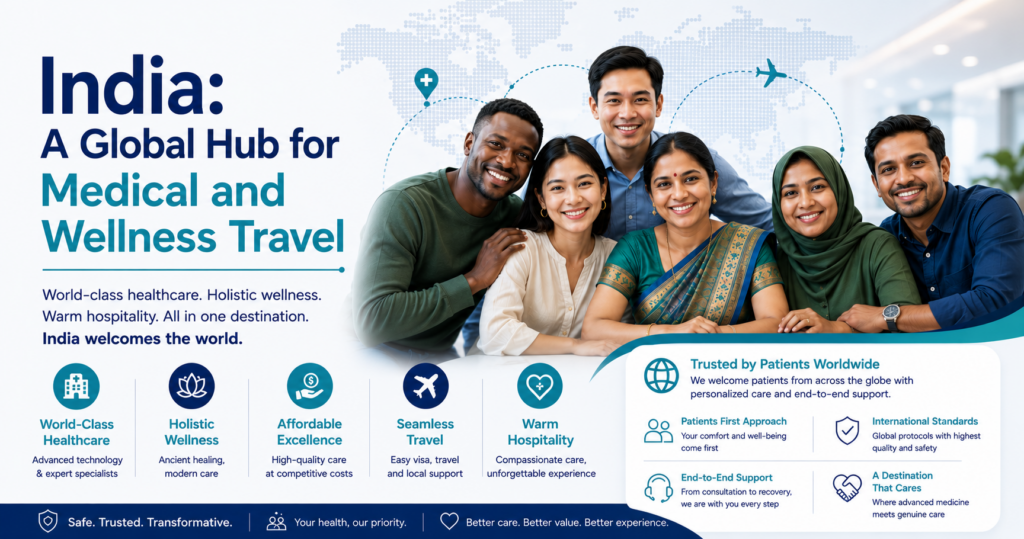
That is one reason India medical and wellness travel continues growing rapidly across Asia, Africa, the Middle East, Europe, and North America. India has become a global destination for affordable advanced treatment, Ayurveda, yoga, preventive care, and long-term recovery support. The country’s medical value travel sector is projected to grow strongly through 2026 as more international patients look for lower treatment costs, shorter waiting times, and wellness-focused recovery options.
For many travelers, especially from Thailand, India feels less like a hospital destination and more like a place where treatment and healing happen together.
Why the World Is Looking at India for Health and Healing
People today do not only want surgery. They want clarity, trust, recovery support, and better long-term health.
That shift changed global medical tourism completely.
Many families now compare countries based on:
And this is where India stands out.
Patients now travel to India from:
Some come for complex surgeries. Others come for preventive wellness programs, stress recovery, Ayurveda retreats, yoga therapy, or second medical opinions.
India gives many travelers a middle path between those two.
How India Became a Global Medical Powerhouse
India did not become a major medical destination overnight.
The country built a strong healthcare ecosystem over decades through hospital expansion, specialist training, medical technology investment, and large-scale treatment experience.
Now, many Indian hospitals handle international patients daily.
That changes the experience significantly.
Advanced Hospitals and Surgeries at a Fraction of the Cost
India now has major multi-specialty and super-specialty hospitals offering:
Many centers follow international infection control systems, modern ICU standards, and global accreditation practices.
The cost difference remains one of the biggest reasons patients compare India seriously.
That financial gap matters enormously for middle-class and upper-middle-class families.
At the same time, India handles very high treatment volumes. That repetition helps hospitals refine surgical systems, recovery planning, and patient coordination over time.
For example:
- Heart bypass surgery
- Knee replacement
- Cancer treatment
- IVF
- Spinal surgery
These can cost dramatically less while still providing modern treatment environments.
“The treatment felt more organized than we expected.” Many travelers from Africa and Thailand say the same thing afterward.
Tailored for Global Patients
International patients worry about much more than surgery.
They worry about airport pickup, language support, food, local transportation, recovery stay, and emergency coordination.
What patients worry about
What many hospitals provide
Most large Indian hospitals now operate dedicated international patient departments to handle these concerns. This matters especially for older travelers.
For Thai and Asian patients, rice-based meals, vegetarian and non-vegetarian options, family-friendly support, and warm hospitality help reduce stress during recovery.
That emotional comfort becomes part of healing too.Wellness Side: Ayurveda, Yoga, and Preventive Health
India’s healthcare story is not only about surgery.
The wellness side plays a major role too.
Many travelers now come to India not because they are critically ill, but because they want to slow down health decline before it becomes serious.
That includes concerns like:
- stress
- poor sleep
- weight gain
- burnout
- chronic pain
- early diabetes
- high blood pressure
And this is where India’s traditional systems become globally relevant.
AYUSH – India’s Traditional Wellness Engine
AYUSH stands for:
- Ayurveda
- Yoga & Naturopathy
- Unani
- Siddha
- Homeopathy
For many international travelers above 40, Ayurveda and yoga feel appealing because they focus heavily on:
- lifestyle
- balance
- prevention
- recovery
India wellness tourism continues growing because people increasingly want healthcare that feels more personal and sustainable.
Many wellness travelers now choose:
- yoga retreats in Rishikesh
- Ayurveda programs in Kerala
- detox retreats
- meditation programs
- stress-management retreats
Some combine these programs after medical treatment.
For example:
- surgery first
- recovery wellness later
That combination attracts many long-stay international visitors.
From “Heal in India” to “Heal by India”
India’s healthcare positioning is now moving beyond traditional medical tourism branding.
The “Heal in India” vision aims to position India as a trusted global health destination supported by both:
- modern medicine
- traditional wellness systems
This matters because global travelers increasingly want integrated care.
Not:
- surgery alone
- wellness alone
But both together.
Many hospitals now work alongside:
- Ayurveda centers
- yoga therapists
- rehabilitation programs
- lifestyle medicine experts
That combination creates something relatively unique globally.
The message behind “Heal by India” is simple:
India wants to offer both treatment and long-term wellness support.
Policy Push: “Heal in India,” AYUSH Visa, and Medical Hubs
Government support plays a major role in building trust internationally.
And India has become more structured in this area recently.
“Heal in India” – A Government-Backed Push
“Heal in India” is part of a broader effort to strengthen India’s image as a global medical and wellness destination.
The initiative focuses on:
- better visibility for hospitals
- easier patient coordination
- stronger branding
- quality improvements
- smoother international patient support
This matters because international travelers want predictability.
Especially travelers above 40.
People want fewer surprises during healthcare travel.
Explore Hospitals in IndiaAYUSH Visa – Easier Access for Wellness Travelers
India also introduced the AYUSH Visa for travelers seeking:
- Ayurveda
- yoga
- naturopathy
- traditional wellness therapies
This sends a strong signal globally.
India is treating wellness tourism as a serious long-term sector, not just a side offering.
The AYUSH Visa helps travelers planning:
- multi-week wellness retreats
- detox programs
- long-term therapy stays
- preventive healthcare visits
That structure improves confidence for international visitors.
Medical Hubs and Better Accreditation
India also continues developing regional medical hubs with stronger infrastructure and accreditation systems.
The idea is simple:
- hospitals
- hotels
- diagnostics
- recovery stays
- wellness centers
should work together more smoothly in one ecosystem.
That matters because healthcare travel becomes stressful when coordination breaks down.
For international patients, smoother systems create safer experiences.
💬 Chat on WhatsApp for Medical Visa HelpWho Is Coming to India and Why?
Different regions travel to India for different reasons.
Africa
Patients often travel for:
- Heart surgery
- Kidney care
- Cancer treatment
- Orthopedic surgery
Middle East
Common reasons include:
- Cardiac treatment
- Bariatric surgery
- Fertility treatment
- Oncology
Thailand and Southeast Asia
Travelers often compare India with Thailand, Turkey, and Singapore based on:
- Cost
- Treatment complexity
- Wellness integration
Western Countries
Many patients come for:
- IVF
- Dental work
- Elective surgeries
- Wellness recovery
- Preventive health programs
And increasingly, travelers combine treatment with lifestyle reset programs.
Many visitors in their 40s to 60s say they arrive for surgery and leave with healthier routines after trying yoga, meditation, or wellness therapy for the first time.That combination stays with people emotionally.
Cost and Value – What Global Travelers Really Gain
Price matters.
But value matters more.
Many surgeries in India still cost dramatically lower than in Western healthcare systems even after adding:
- flights
- stay
- local travel
- attendant expenses
For many families, the total treatment journey in India still costs less than treatment alone in their home country.
But travelers also value:
- longer doctor discussions
- recovery support
- rehabilitation options
- teleconsult follow-up
- wellness integration
This is why many people return later for checkups or preventive wellness stays.
Planning treatment in India?
Get expert guidance on hospitals, doctors, cost estimates, and travel support.
Blending Treatment and Wellness: How a Trip to India Can Look
Most travelers do not book treatment in one step. They move through a clear journey: compare, share reports, plan travel, receive care, and continue follow-up after returning home.
Online Research and Shortlisting
Patients compare:
based on:
Many start by researching hospitals, doctors, and wellness centers online.
Sharing Reports and Getting a Plan
Patients usually send:
Doctors review the case remotely and share:
Visa, Flights, and Stay
Patients apply for:
depending on the purpose of travel.
Most hospitals help with:
That coordination reduces anxiety significantly.
Treatment and/or Wellness Program
This stage depends on the traveler’s goals.
Medical care may include:
Surgery Chemotherapy Cardiac treatment Fertility treatmentWellness care may include:
Panchakarma Yoga retreats Detox therapy Stress-management programs RehabilitationMany travelers combine both.
Follow-Up and Life After the Trip
Follow-up usually continues through:
Some travelers return yearly for:
That long-term relationship matters more than short-term tourism.
Key Specialties That Draw Global Patients
Cardiac Care
Bypass surgery, angioplasty, valve replacement
Oncology
Chemotherapy, radiation, targeted treatment
Orthopedics
Knee replacement, hip replacement, spine surgery
Organ Transplant
Liver and kidney treatment
Fertility & IVF
Advanced reproductive care
Dental Care
Implants and full-mouth rehabilitation
Cosmetic Surgery
Reconstructive and aesthetic procedures
Wellness & Rehabilitation
Ayurveda, yoga, pain management, stress recovery
Is India the Right Choice for You?
India may be a good fit if:
- healthcare costs feel overwhelming at home
- waiting times are too long
- you want treatment plus wellness recovery
- you value both modern medicine and holistic health
You should pause and plan more carefully if:
- long flights feel medically unsafe
- you have no travel support person
- you feel uncomfortable navigating another culture
Good decisions happen when:
- local doctors
- Indian doctors
- family members
all discuss the plan together.
That balance matters emotionally and medically.
How to Choose the Right Indian Hospital or Wellness Center
Do not choose based only on marketing videos.
Look deeper.
For hospitals, check:
- accreditation
- international patient experience
- treatment specialization
- pricing transparency
- infection standards
- language support
For wellness centers, check:
- licensed practitioners
- proper hygiene
- realistic treatment promises
- qualified Ayurveda doctors
- structured wellness programs
And always trust your instincts.
If communication feels unclear early, it usually becomes harder later too.
FAQs – India as a Global Hub for Medical and Wellness Travel
Why do so many international patients choose India for medical treatment?
Many patients choose India because treatment costs are often much lower than Western countries while hospitals still provide modern infrastructure and experienced specialists. India also offers shorter waiting times for many procedures. For travelers above 40, that combination feels practical and financially manageable.
How much can I actually save by getting surgery in India?
Savings depend on the treatment and your home country. In many cases, surgeries in India may cost 60–90% lower than prices in the US or UK. Even after adding flights and hotel stay, families often still spend less overall.
Is it safe to combine surgery and Ayurveda or yoga in one trip?
Yes, many patients combine medical treatment with wellness recovery programs after doctor approval. Yoga, meditation, Ayurveda therapies, and rehabilitation programs may help stress management and recovery. Still, patients should always follow their surgical team’s guidance first.
How long should I stay in India for treatment and recovery?
The answer depends on the procedure and overall health condition. Some wellness travelers stay for one to three weeks, while surgical patients may need longer recovery periods. Doctors usually provide a rough timeline after reviewing reports.
Do Indian hospitals help with visas, airport pickup, and local support?
Yes. Most hospitals handling international patients offer support with visa documents, airport pickup, hotel coordination, translators, and local travel assistance. These services help reduce stress for older travelers and families.
Are wellness retreats in India suitable for people over 50 with health issues?
Many wellness retreats design programs specifically for people above 50 dealing with stress, joint pain, weight issues, or lifestyle-related concerns. Still, travelers with serious medical conditions should always discuss plans with qualified doctors before joining intensive wellness therapies.
Do I need travel insurance or international health insurance for my trip?
Travel insurance is strongly recommended, especially for major medical procedures or long stays abroad. Some hospitals also ask for insurance details before treatment planning. Good insurance reduces unexpected financial pressure during emergencies.
Can I continue follow-up with Indian doctors once I return home?
Yes. Many hospitals now offer teleconsultations and remote follow-up after patients return home. Patients usually share reports, recovery updates, and scan results online for continued guidance.