
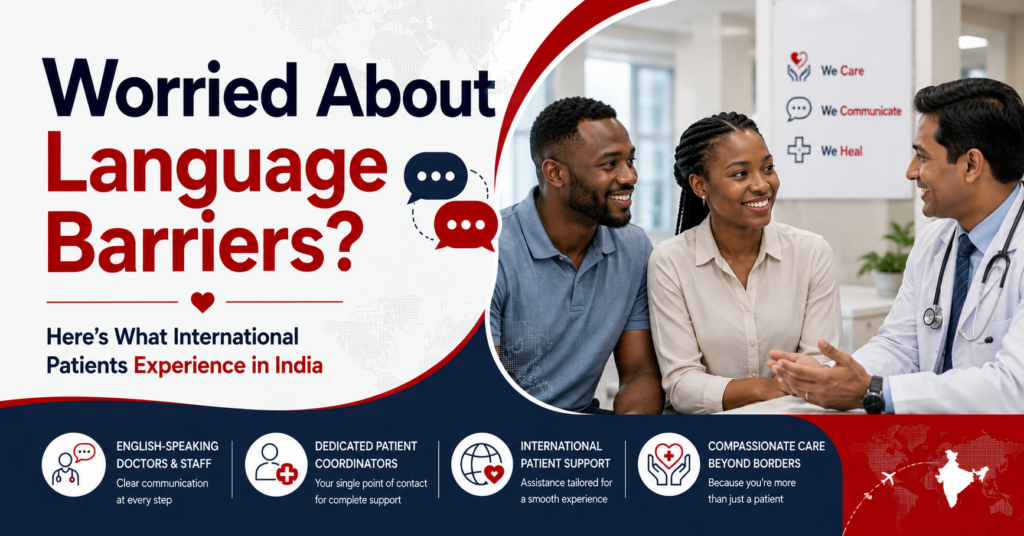
The Real Fear Patients Don’t Always Say Out Loud
Most patients ask about cost.
They ask about surgery.
They ask about hospital names, doctors, visa, hotel stay, and recovery time.
But privately, a different worry sits in the back of their mind.
“What if I cannot explain my problem properly?”
“What if I do not understand what the doctor says?”
“What if my family is back home and nobody updates them clearly?”
This fear is real.
For many international patients, especially from Kenya, Nigeria, Tanzania, Uganda, Rwanda, Bangladesh, Nepal, and the Middle East, the language question can feel as important as the treatment itself.
Because healthcare is not only about surgery.
It is about trust.
And trust becomes difficult when communication feels uncertain.
The good news is this: most major English speaking hospitals in India for international patients are well prepared for this concern. But it is still important to know what to expect before you travel.
Is the Language Barrier in Indian Hospitals Real?
Yes, language barriers can happen in India.
It is better to say this honestly.
India has many languages. Hindi, Marathi, Tamil, Telugu, Malayalam, Kannada, Bengali, Gujarati, and Punjabi are spoken across different states. In smaller local hospitals, some support staff may be more comfortable in regional languages than English.
So if a patient walks into a small local clinic without support, communication may feel difficult.
But international-facing hospitals are different.
Large hospitals in cities like Mumbai, Delhi, Chennai, Bengaluru, Hyderabad, and Kochi regularly treat international patients. These hospitals usually have international patient departments, English-speaking doctors, trained coordinators, and formal processes for foreign patients.
You can also explore hospitals in India for international patients before shortlisting your treatment options.
That does not mean every single staff member will speak perfect English.
It means the hospital system is designed to make sure the patient does not feel lost.
This difference matters.
A local hospital may expect the patient to adjust.
An international hospital knows the patient needs guidance.
English in Indian Hospitals: What Patients Actually Experience
English is widely used in Indian medical education. Most Indian doctors study medicine in English, and many hospital documents are also prepared in English.
Where English is commonly used
Medical records, prescriptions, investigation reports, discharge summaries, consent forms, and clinical discussions are often prepared in English.
So when international patients meet senior doctors, surgeons, consultants, and specialists, communication is usually not the biggest problem.
Doctors generally explain:
But the experience can vary
The experience may vary with junior ward staff, technicians, food service staff, housekeeping teams, or transport support.
Some may speak English well. Some may speak basic English. Some may prefer a local language.
Your communication bridge inside the hospital
A good hospital does not leave the patient alone to manage every conversation.
The international desk, patient coordinator, or medical travel partner becomes the bridge between the patient, doctor, hospital team, billing desk, pharmacy, and family members back home.
Yes, English is commonly used in major Indian hospitals. But the best experience comes when your communication is coordinated properly from the start.
International Patient Desks: Your Communication Bridge
Most leading hospitals in India have an international patient desk.
This is one of the most important support systems for foreign patients.
The international patient desk helps patients before arrival, during hospital stay, and after discharge.
If you are still understanding the full travel process, read this guide on the medical tourism journey in India.
Their role may include:
- collecting medical reports
- arranging doctor opinions
- sharing treatment estimates
- helping with medical visa letters
- coordinating airport pickup
- scheduling appointments
- helping during hospital admission
- explaining billing steps
- guiding family members
- arranging interpreter support if needed
- helping with discharge instructions
- coordinating follow-up after the patient returns home
For many patients, this desk becomes the first trusted point of contact.
Instead of trying to call multiple hospital departments, the patient or family can speak to one coordinator who understands the case.
This is especially helpful when the patient is already stressed.
If you are travelling from Africa, Bangladesh, Nepal, or the Middle East, ask one direct question before you finalize the hospital:
“Who will coordinate with me in English from arrival to discharge?”
That one question can prevent many problems later.
Need Help Understanding Hospital Communication Support?
Before choosing a hospital, it is natural to ask whether doctors, nurses, and coordinators will communicate clearly in English.
Zinek Healthcare can help you understand which hospitals are better prepared for international patients and how communication support will work before you travel.
Have questions about hospital communication?
Our team can guide you on WhatsApp and explain how your hospital will support you in English.
Chat on WhatsAppWhatsApp Coordination: How It Works Before, During, and After Treatment
For many international patients, WhatsApp is not just a chat app. It is the main communication channel.
Why WhatsApp matters in medical travel
Families use it for reports, voice notes, photos, location sharing, payment confirmations, travel updates, and daily check-ins.
A patient may not want to email every document. A family member may not understand hospital portals. A relative back home may want quick updates.
It keeps everyone connected
This is why WhatsApp coordination is so important in medical travel. It gives patients and families one familiar channel for updates before, during, and after treatment.
Before Travel
Before the patient comes to India, WhatsApp can be used to share important documents, questions, and planning details.
During Hospital Stay
Once the patient reaches India, WhatsApp can help with daily hospital coordination and family updates.
After Discharge
After treatment, WhatsApp can support follow-up care, medicine questions, and report sharing.
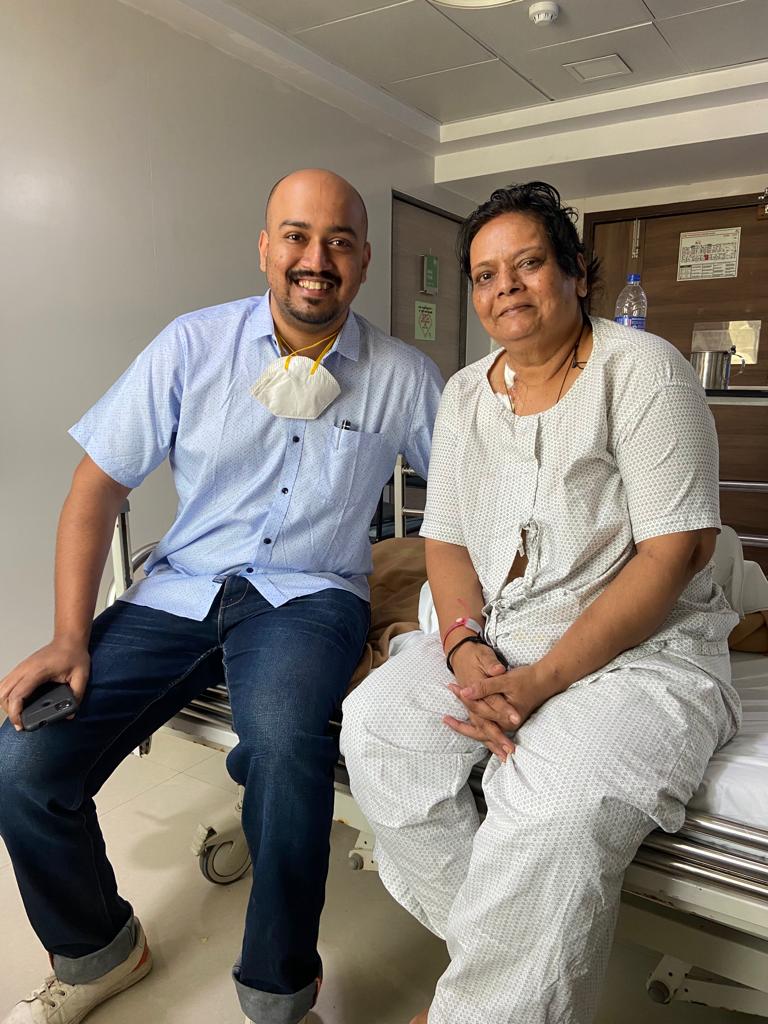
A Patient Voice: “I Was Nervous About Understanding the Doctor”
One international patient once said something simple:
That is what good coordination does.
It does not remove every worry.
But it gives the patient a clear path.
What About Nurses, Ward Staff, Food Staff, and Support Teams?
This is where expectations should be realistic.
Doctors and international coordinators may communicate well in English. But not every person inside the hospital may speak fluent English.
In India, support staff may speak Hindi or the local language of that city.
For example:
- Mumbai staff may speak Hindi or Marathi
- Chennai staff may speak Tamil
- Hyderabad staff may speak Telugu
- Bengaluru staff may speak Kannada
- Kochi staff may speak Malayalam
- Delhi staff may speak Hindi
This does not mean patients are ignored.
It simply means communication may need support in some moments.
For simple needs like water, food, cleaning, room service, wheelchair support, or basic ward requests, patients can use:
- gestures
- simple English
- Google Translate
- hospital coordinator support
- family companion support
- pre-written request notes
A practical tip is to prepare simple phrases before travel:
- “I need water.”
- “I have pain.”
- “Please call the nurse.”
- “Please call my coordinator.”
- “I need help going to the washroom.”
- “I feel dizzy.”
- “Please explain this medicine.”
These small preparations help.
A good medical travel partner can also brief the hospital team in advance about the patient’s language needs.
Interpreter Services in Indian Hospitals: When You Need One
Not every patient needs an interpreter.
Many international patients manage well with English-speaking doctors and coordinators.
But interpreter support can be useful when the patient or family is more comfortable in another language.
Hospitals may arrange interpreter support for languages such as:
- Arabic
- French
- Swahili
- Russian
- Bengali
- Nepali
- other regional or international languages depending on availability
Interpreter support may be helpful during:
- doctor consultation
- consent explanation
- surgery planning
- billing discussion
- discharge instruction
- complex diagnosis explanation
- transplant or cancer treatment planning
Some hospitals may provide interpreter help as part of international patient services. Others may charge separately, especially for less common languages or dedicated full-time interpreters.
The best approach is to request this before travel.
Ask:
- Is interpreter support available for my language?
- Is it free or paid?
- Will the interpreter be available during doctor consultation?
- Can my family join the consultation online?
- Will discharge instructions be explained in English?
Do not wait until admission day to ask these questions.
How to Prepare for Communication Before You Travel
Good communication starts before the patient boards the flight. Here is a simple checklist to help international patients feel more prepared before travelling to India.
Save Your Coordinator’s WhatsApp Number
Keep the hospital coordinator or medical travel advisor’s number saved. Also share it with your family member or companion.
Keep Medical Reports in One Folder
Carry printed and digital copies of all important medical documents.
If possible, keep an English summary of the case.
Write Down Your Main Questions
Before consultation, list your questions. Patients often forget questions during doctor meetings. Writing them down helps.
Download Google Translate Offline
Download English and your preferred language for offline use. Hospital Wi-Fi may not always work perfectly.
Carry a Companion if Possible
A companion helps with hospital movement, emotional support, document handling, and daily communication.
Ask for Discharge Instructions Clearly
Before leaving the hospital, ask for all important recovery and follow-up instructions.
Do not leave the hospital with doubts.
Confirm Follow-Up Communication
Ask whether you can share reports after returning home. Also ask how online follow-up will happen.
This is very important for international patients.
How Zinek Healthcare Helps International Patients Communicate Better
International patients do not only need a hospital appointment.
They need a support system.
Zinek Healthcare helps patients coordinate treatment in India with clearer communication from the first message to return-home follow-up.
Support may include:
- report collection
- doctor opinion coordination
- hospital shortlisting
- cost estimate comparison
- English communication support
- medical visa guidance
- airport pickup coordination
- accommodation guidance
- hospital appointment support
- discharge and follow-up coordination
Families who are unsure about documentation can also review our medical visa guidance for India.
This becomes useful when the family is trying to compare hospitals and understand next steps from another country.
Instead of repeating the same case to many hospitals, patients can follow a more organized path.
Get Treatment Guidance in English
If your family is planning treatment in India, communication should not become another source of stress.
Zinek Healthcare can help you coordinate everything in English — from your first message to your return home.
Plan before you travel
Get a treatment plan and hospital estimate before you travel.
Get Treatment Plan on WhatsAppFAQ: Language and Communication in Indian Hospitals
Do Indian doctors speak English?
Yes. Most doctors in major Indian hospitals speak English because medical education and hospital documentation in India commonly use English. International-facing hospitals are usually comfortable treating English-speaking patients.
Will someone translate during surgery?
During surgery, the patient is under medical care and direct conversation is limited. However, before surgery, the doctor, anesthetist, and coordinator should explain the procedure, consent, risks, and instructions clearly. Interpreter support can be requested if needed.
Can my family get updates in English while I am in hospital?
Yes, many hospitals and coordinators can update family members in English through WhatsApp, phone calls, or in-person meetings. It is best to confirm this before admission.
What language are medical documents written in?
Most hospital reports, prescriptions, discharge summaries, investigation reports, and treatment estimates in major Indian hospitals are written in English.
Is there a cost for interpreter services?
It depends on the hospital and language requested. Some international patient departments may provide basic language support, while dedicated interpreter services may be paid. Always ask before travel.
Final Thoughts
The language question is real.
Patients should not feel embarrassed to ask about it.
When you travel to another country for treatment, you deserve clear answers, simple instructions, and someone who can guide you calmly.
Major English speaking hospitals in India for international patients are used to handling patients from Africa, Bangladesh, Nepal, the Middle East, and many other regions.
But the best experience comes when communication is planned early.
Ask who will coordinate with you.
Ask how your family will receive updates.
Ask if interpreter support is available.
Do this before you travel.
Because when communication is clear, the treatment journey feels less frightening — and much more manageable.