
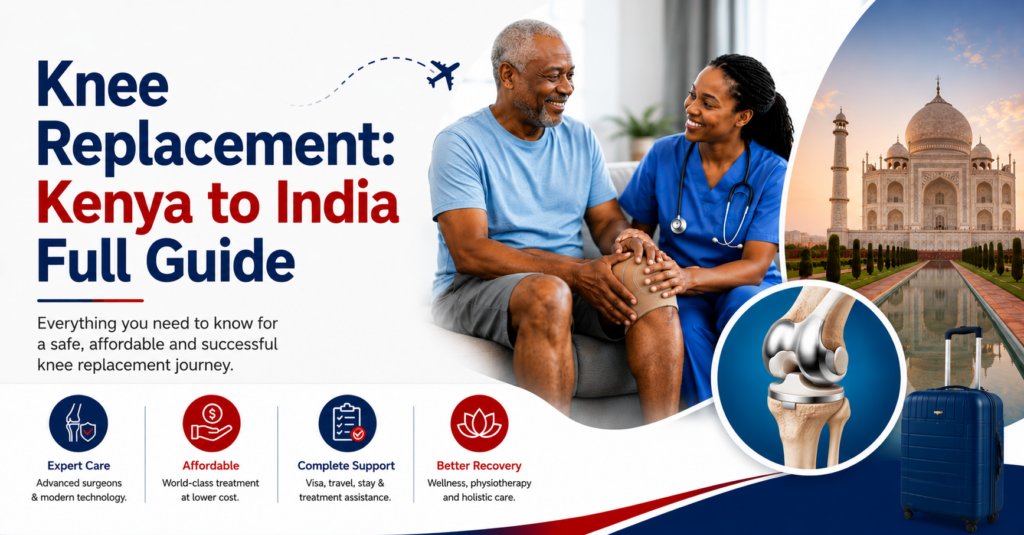
Knee replacement in India for international patients has become one of the fastest-growing medical tourism choices for people above 45 because India offers experienced orthopedic surgeons, modern hospitals, and treatment costs that are often 60–80% lower than the US or UK. India now performs more than 200,000 knee replacements yearly, with success rates often reported between 96% and 99%.
But statistics are only part of the story.
Most patients don’t start by searching for surgery. They start because daily life slowly becomes painful. First, stairs feel harder. Then long walks disappear. Eventually, even getting out of bed starts hurting more than it should.
That’s usually the moment people begin asking:
“Can I really trust another country for surgery?”
Fair question.
And honestly, if you choose the right hospital and surgeon, the answer is often yes.
Why Patients 45+ Are Choosing India for Knee Replacement
Ten years ago, many patients from Kenya or Bangladesh looked toward Europe or South Africa for advanced orthopedic care. Today, India sits at the center of that conversation.
The reason is simple. The balance makes sense.
India now combines:
Experienced Orthopedic Surgeons
India handles thousands of knee replacements every year with highly experienced joint replacement specialists.
Modern Hospitals
Advanced operation theaters, international patient support, and globally accredited healthcare systems.
Robotic Surgery Options
Many hospitals now offer robotic-assisted knee replacement for higher precision and faster recovery.
Lower Treatment Costs
Patients often save 60–80% compared to treatment costs in the US, UK, or many private hospitals abroad.
Shorter Waiting Periods
Most patients receive consultations and surgery dates within weeks instead of waiting months.
That combination changed medical travel completely. Recent global studies estimate osteoarthritis affects around 7–8% of the world population, with knee osteoarthritis being the most common joint issue. Women above 60 show even higher rates.
You can see that shift everywhere now.
More people stay active longer. More people gain weight earlier in life. Previous injuries also catch up with age. By the late 40s or 50s, knees often begin showing wear that simple medicines cannot control anymore.
At the same time, India built one of the world’s largest orthopedic ecosystems.
The country now performs more than 200,000 knee replacements every year. Some surgeons handle thousands of joint replacements during their careers. That experience matters because repetition improves systems, rehab planning, and recovery protocols.
Many patients from Kenya in their late 50s tell us something similar after surgery:
“I forgot what normal walking felt like.”
That emotional shift is bigger than most marketing brochures explain.
From knee pain to guided recovery in India
One patient shared how Zinek’s support made the treatment journey easier, from planning to recovery. For many international patients, this guidance matters as much as the surgery itself.
“Thanks to Zinek for the support which you have rendered.”Read the full patient story
Why the Cost Difference Changes Everything
This is usually the turning point for international patients.
A private knee replacement in Nairobi can quickly cross KES 1.2 million once hospital stay, implant charges, tests, medicines, and rehab get added together.
Now compare that with India.
For international patients, total knee replacement in India often ranges between:
- $3,500 and $9,000
- roughly KES 700,000 to 900,000 for many complete packages
Even after flights and hotel stay, the overall cost often remains lower than treatment in many private hospitals abroad.
By contrast:
- UK private surgery often crosses $15,000–$21,000
- US pricing regularly goes above $40,000
That difference changes family decisions quickly.
But cost alone is not enough. Patients also want confidence.
That’s where India’s orthopedic reputation matters.
Top hospitals now offer:
Robotic knee replacement India programs
Imported implants
Digital rehabilitation tracking
Dedicated international patient teams
And because hospitals handle foreign patients daily, the process feels more organized than many people expect.
Planning Knee Surgery in India?
Get expert guidance on hospitals, doctors, cost estimates, and travel support.
Hospitals Kenyan Patients Commonly Shortlist
Most people searching online feel overwhelmed by hospital names. Every website claims to be “the best.”
The smarter approach is matching the hospital to your actual needs.
For example, many African patients choose Apollo Hospitals Delhi because the hospital already works extensively with international orthopedic patients. Their Africa coordinators help with visas, airport pickup, and recovery planning.
Others prefer Artemis Hospital Gurgaon because of its robotic surgery programs and strong orthopedic rehabilitation systems.
Meanwhile, Medanta – The Medicity often becomes the choice for complicated cases involving diabetes, obesity, or heart conditions alongside knee damage.
Then there’s Fortis Memorial Research Institute, which many families shortlist when patients have multiple medical concerns needing coordinated care.
The important thing is this:
Don’t choose a hospital based only on glossy videos or celebrity marketing.
Look deeper.
Ask these questions before choosing a hospital
How many knee replacements they perform yearly
Infection rates
Implant brands used
Rehab support systems
Recovery planning after discharge
Understanding the Real Cost of Knee Replacement in India
Now let’s break the numbers down properly. A single knee replacement in India usually costs around:
- ₹1.5–4.5 lakh
- roughly $3,500–$6,500
Robotic surgery or premium imported implants can push costs higher.
For patients needing both knees, bilateral knee replacement India packages often range between:
- ₹3.5–8 lakh
- around $6,500–$9,000+
Some patients choose both knees together to avoid separate travel and recovery cycles. Others prefer spacing surgeries months apart.
There’s no universal answer here.
Age, diabetes, heart condition, weight, and recovery expectations all influence that decision.
Another important point many people miss:
Not every hospital package includes the same things.
Usually, packages cover:
- surgeon fee
- implant
- operation theater
- room charges
- basic medicines
- standard physiotherapy
But flights, hotel stays, translators, and extended recovery apartments may cost extra.
A common mistake we see is patients assuming “package” means absolutely everything.
Always ask for written inclusions.
What Actually Happens From Kenya to India
This part scares people initially. But once patients understand the journey step by step, anxiety usually drops.
Start with local diagnosis
Most people start with local diagnosis first. They already tried:
- Medicines
- Injections
- Walking support
- Physiotherapy
Eventually the pain reaches a point where movement becomes limited. Sleep suffers too.
Surgery becomes realistic
That’s usually when surgery becomes realistic.
Share reports with Indian hospitals
The next step is sharing reports with Indian hospitals. Most hospitals now accept:
- X-rays
- MRI scans
- Blood reports
through WhatsApp or email.
Get doctor review and plan
Doctors review everything remotely and send:
- Treatment suggestions
- Implant options
- Estimated cost
- Expected stay duration
That early planning helps patients avoid surprises later.
Visa, Flights, and Travel Planning
India offers medical visa routes for many countries including Kenya, Bangladesh, Nepal, and several African nations.
Hospitals usually issue medical invitation letters after confirming treatment plans.
Kenyan patients often worry most about flying after surgery.
That concern is completely normal.
Direct flights from Nairobi to Delhi take around 7.5 hours. Many patients use compression stockings and walk briefly during the flight home to reduce clot risk.
Simple precautions matter more than people realize.
One thing many travelers forget is vaccination paperwork.
Indian medical visa rules for Kenyan travelers often require:
- Yellow Fever certificate
- Oral Polio vaccination records
Always confirm current rules before booking flights.
What documents are needed for an Indian medical visa?
Usually:
- passport
- medical reports
- hospital invitation letter
- visa application documents
- vaccination certificates where required
Surgery Day and the First Week
Most patients arrive one or two days before surgery.
Hospitals complete:
- blood tests
- ECG
- chest evaluation
- anesthesia clearance
The surgery itself usually takes around one to two hours.
Now here’s the part that surprises many first-time patients: Most people stand or walk with support within 24 hours if medically stable.
That early movement improves circulation and recovery. Physiotherapy starts fast because modern knee replacement recovery depends heavily on movement.
Patients often expect complete bed rest. That’s no longer how recovery works.
One patient from Mauritius laughed after surgery and said: “I mentally prepared for weeks in bed. Instead they made me walk.”
That reaction is common.
Recovery: What Real Life Looks Like After Surgery
This is the part patients care about most.
“Will I actually walk normally again?”
For most people, yes, recovery brings major improvement. But expectations should stay realistic.
A knee replacement improves quality of life. It does not create a 20-year-old knee.
The first two weeks focus mainly on:
- wound healing
- swelling reduction
- basic walking
- pain management
Around four to six weeks, many patients begin walking longer distances with less support.
By three months, most people notice major changes in daily life:
- better sleep
- easier walking
- improved independence
- less fear while moving
But rehab matters enormously.
Patients who skip exercises usually recover slower.
That’s why many hospitals recommend staying nearby for physiotherapy before flying home.
The Risks Nobody Should Hide
Good hospitals talk honestly about risk.
Every surgery carries complications.
Potential issues include:
- infection
- blood clots
- stiffness
- implant wear over years
- future revision surgery
The overall success rate for knee replacement in India remains very high, often around 96–99% in experienced centers. Still, no surgeon should promise perfection.
If someone says:
“Zero risk.”
Walk away.
Patients deserve honesty, not sales language.
Are You a Good Candidate for Knee Replacement Travel?
Not everyone with knee pain needs surgery immediately. But if pain is starting to control your daily life, it may be time to seriously consider treatment.
You may be ready if you face:
- Difficulty walking even short distances
- Pain while climbing stairs
- Trouble standing for long periods
- Disturbed sleep because of knee pain
- Swelling and stiffness almost every day
You may have already tried:
- Pain medicines
- Injections
- Physiotherapy
- Walking support
Doctors will also check:
- Heart condition
- Diabetes
- Blood pressure
- Lung health
- Body weight
This step is important because safe recovery matters more than fast surgery. Sometimes doctors recommend controlling diabetes, reducing weight, or improving heart health first before surgery. That is not a rejection. It simply means the medical team wants lower risk and smoother recovery.
A good surgeon will always focus on long-term safety, not rushing you into the operation.Practical Advice for Kenyan and International Patients
Small travel details matter more than people expect.
Bring:
- digital copies of all reports
- comfortable loose clothing
- slip-resistant footwear
- medicines list
- one trusted companion if possible
Many patients also underestimate post-op fatigue.
Don’t plan sightseeing immediately after surgery.
Recovery first. Tourism later.
Patients from Bangladesh and Nepal usually adjust quickly because food and cultural patterns feel familiar.
Meanwhile, patients from Kenya and Mauritius often prefer choosing hospitals with stronger international coordination teams.
That support reduces stress significantly during recovery.
[link to what to pack for medical travel to India]
Final Thoughts
Most patients considering knee replacement already know one thing clearly:
They don’t want to keep living in pain.
The real challenge becomes choosing where and how to move forward safely.
India became a major destination for orthopedic surgery because it solved several problems together:
- affordability
- surgeon experience
- faster treatment access
- recovery support
- international patient coordination
For many patients above 45, that combination creates a realistic path back to normal movement and independence.
And honestly, that’s what most people want in the end.
Not luxury.
Not marketing promises.
Just the ability to walk comfortably again.
Frequently Asked Questions (FAQ)
How much does knee replacement in India cost for international patients?
Most international packages range from $3,500 to $9,000 depending on implant type, city, and hospital category.
How long do I need to stay in India after surgery?
Most patients stay around 10–14 days after single knee replacement. Bilateral surgeries may require longer recovery.
Is knee replacement safe above age 60?
Often yes, if overall health remains stable. Doctors evaluate heart health, diabetes, and lung condition carefully before approval.
Can both knees be operated in one trip?
Yes. Many patients choose bilateral surgery to avoid separate travel and recovery periods later.
How soon can I fly home after knee replacement?
Usually after surgeon clearance, often around 10–14 days after surgery if recovery stays stable.